
Acceptance as a Byproduct of Authentic Engagement with Life
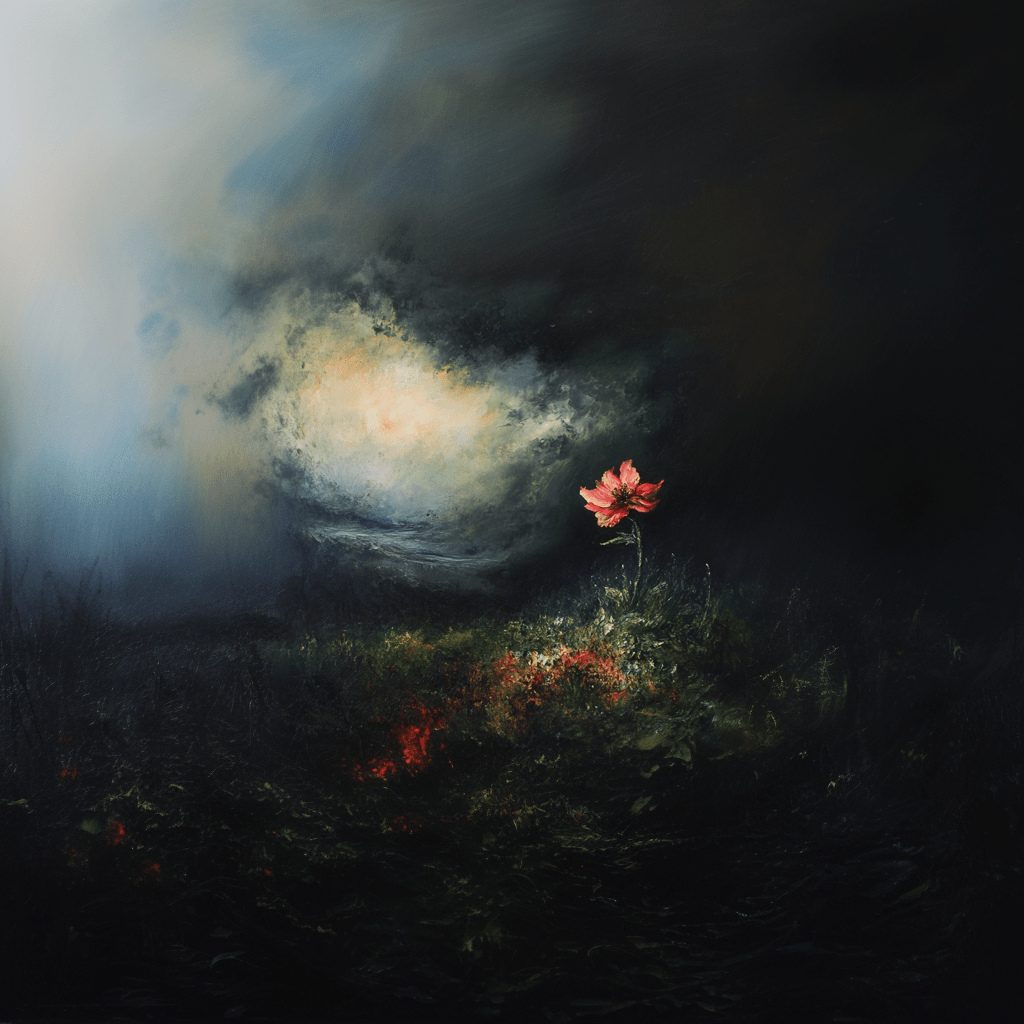
We chase acceptance as a phantom, a wisp of smoke that evades our grasp the harder we try to seize it. It is the elusive prize, the whispered promise of peace, yet the more we strive for it as a tangible goal, the more it slips through our fingers like sand. Acceptance, we are told, is the key to serenity, the balm for our restless souls. But is it something to be achieved, a summit to be conquered? Or is it something far more subtle, a natural consequence—the residue—of engaging fully and honestly with the tumultuous, unpredictable current of life?
Picture a man, his face etched with the strain of forced tranquility, sitting by a raging sea. He clenches his fists, repeating mantras of acceptance, yet his eyes betray a storm within that rivals the one outside. A fierce yet obligated resistance to the waves that crash against the shore. He wills himself to accept the tempest, but the tempest remains, and his struggle only deepens his despair. This forced acquiescence, this strained attempt to impose peace upon chaos, is a futile endeavor. It is a battle fought with clenched fists against an ocean that cannot be subdued.
Acceptance, then, is not a state to be forced into existence but something that gathers around us, like the tide, when we live with eyes open and cease struggling against the waves. It is the quiet understanding that arises from confronting our fears, embracing our uncertainties, and surrendering to the inevitable flow of existence. It is not resignation, but a profound and hard-won peace, a stillness born from the heart of the storm. Acceptance is not the absence of struggle, but what remains after it. How can one accept the sea without ever daring to swim?
I. The Illusion of Acceptance as a Goal
The misconception that acceptance is a destination to be reached, a task to be completed, pervades modern self-improvement narratives. These narratives frame acceptance as a milestone, a conquest, a tangible prize—something to be attained through effort and discipline. Yet, this very framing undermines its true essence, transforming acceptance from a liberation into an obligation, a burden to be borne rather than a state of being that arises naturally.
Modern self-help culture often portrays acceptance as an item on a psychological checklist, something to “achieve” like success or productivity. We are told to “accept our flaws,” “accept our past,” “accept our circumstances”—as if these were mere cognitive exercises, tasks to be completed through mental gymnastics. This approach turns acceptance into a performance rather than a transformation, an external metric rather than an organic internal shift. It suggests that if we just think correctly, we can command ourselves into acceptance, reducing it to an intellectual trick rather than a lived experience.
This framing is fundamentally flawed because it turns acceptance into a pressure-laden obligation rather than a natural outcome of engagement with life. The more we strive to force acceptance, the more we reinforce resistance to what is. Instead of fostering peace, this approach creates a relentless cycle of self-evaluation: Am I accepting enough? Have I let go properly? This anxious monitoring of our own acceptance ironically prevents us from truly inhabiting the present moment. When we treat acceptance as something to be attained rather than something that emerges, we turn it into another form of control—yet control is the very thing we must relinquish for genuine acceptance to arise.
Like trying to trap a river in our palms, the harder we clutch at acceptance, the more it slips away. The river is not something to be seized but something to be moved with, with a current that carries us when we stop thrashing against it. Acceptance is akin to this: the more we try to force it, to grasp it as a tangible goal, the more elusive it becomes. It is not something to be seized, but something to be allowed, a gentle surrender to the flow of life. True acceptance is found not in the clenched fist of control, but in the open hands of surrender, allowing the water of experience to flow freely, without resistance.
If acceptance is not a goal to be attained, then what fosters it? The answer lies in how we engage with life itself.
II. Authentic Engagement as the Fertile Ground for Acceptance
Acceptance is not a finish line to cross, but a bloom that unfurls when the conditions are right. What, then, is the fertile soil from which it grows? The answer lies in authentic engagement with life, in the courageous act of facing our experiences—the joyful, the painful, and the mundane—with open eyes and an unfettered heart.
Many believe acceptance is something we must force ourselves into, a decision to simply let go
of control. But true acceptance cannot be willed into being—it arises naturally when we engage fully with life, embracing both beauty and struggle without retreating into denial or detachment. Authentic engagement is not passive acquiescence, nor is it a forced march through life’s challenges. It is a dance—a delicate balance between surrender and resistance. A willingness to feel deeply. To wrestle with discomfort. To live fully in the symphony of existence. It is to embrace the full spectrum of human experience, to acknowledge the shadows alongside the light, to honor the complexities of life without seeking to sanitize or control them.
This stands in stark contrast to avoidance, repression, or artificial detachment—those coping mechanisms that seek to shield us from the raw intensity of life. While these strategies may offer temporary respite, they ultimately delay or distort the process of acceptance. They create a barrier between ourselves and the world, preventing us from fully inhabiting our experiences and hindering the natural emergence of acceptance.
As varied as life is on this planet, so, too, are the ways in which we might orient ourselves to the world authentically. Existentialist philosophy, for example, with its emphasis on actively confronting life’s realities, offers a powerful framework for understanding authentic engagement. It calls us to step beyond the distractions and evasions that keep us entangled in inauthentic existence—the automated routines, the socially inherited expectations, the avoidance of discomfort that numbs rather than liberates. True engagement begins with an unflinching awareness of our own thrownness—the recognition that we are always already situated in a world not of our choosing, yet still responsible for how we move within it. Authenticity does not mean escape; it means dwelling fully within the reality of our finitude, recognizing that life is shaped as much by what is uncertain as by what is known. This is not a call to passive resignation but to resoluteness—a way of being in which we claim our existence as our own, meeting both joy and suffering with an open, unwavering presence. This willingness to wrestle with life—to feel deeply, to confront discomfort, to participate fully—is the very soil from which acceptance grows. Acceptance, like hope, is not passive; it is the residue of a lived-in, intentional life. It is the sweat of our struggles, the tears of our sorrows, the laughter of our joys—alchemized into a quiet understanding, a profound sense of peace. Not the absence of conflict, but the wisdom that emerges from navigating it. This call to authenticity, this wrestling with our thrownness, is essential to genuine engagement.
The path to acceptance is often paved with struggle, uncertainty, and even resistance. There will be moments when we recoil from the rawness of experience, when we yearn for the comfort of denial or the illusion of control. But it is in these very moments of resistance that we have the opportunity to deepen our engagement, to lean into the discomfort, to wrestle with the complexities of life. For it is in the heart of struggle that we discover our own resilience, our own capacity for growth and transformation. Acceptance is not the opposite of struggle, it is the fruit that emerges from it, and a life worth living is one that waters it well.
Authentic engagement with life is what allows acceptance to emerge—not effort, but presence.
III. The Bloom of Acceptance: An Emergent Phenomenon
Acceptance is like a flower—not one that can be pried open by force, but one that unfurls only when nurtured by time, patience, and the right conditions. Tugging at the petals will not hasten the bloom; it will only tear them apart. The soil of experience, watered by presence and courage, prepares the ground for this quiet unfolding. It is not in the struggle to control or deny our experiences that acceptance takes root, but in the courageous act of inhabiting them fully, allowing them to shape us, to transform us, to reveal the hidden depths of our being.
True acceptance does not come by force; it arises in the quiet, unseen moments—when we sit with our grief instead of turning away, when we meet our fears without flinching, when we stop trying to escape life’s sharp edges and instead let them carve meaning into us. It is in the willingness to stand fully in our joy, our pain, and our uncertainty that we cultivate the ground where acceptance takes root. It is in the way we trace a loved one’s name in the dust, in the way our grief softens as we speak of them, not in hushed tones, but with love.
Even in the depths of suffering, acceptance can bloom. Viktor Frankl, stripped of everything in the concentration camps—his home, his family, his dignity—discovered that there was one freedom no one could take from him: the power to choose his response. He did not passively accept his fate; he actively engaged with it, finding meaning in the midst of horror. It was not his suffering that shaped him, but his refusal to let suffering define him. Acceptance, for him, was not surrender—it was defiance, a radical assertion of his own humanity.
His experience demonstrates that true acceptance may not come from passivity, but from an unshakable engagement with one’s reality and illuminates the transformative power of authentic engagement. By courageously facing our experiences, not denying them, we foster the conditions for acceptance to bloom. Within struggle and vulnerability, we discover the strength and resilience to embrace our full existence.
This is the paradox of acceptance: it cannot be taken, only given. It is not a goal, but a grace, emerging not from effort, but from the courage to live unguarded. It is not the end of struggle, but what remains when struggle has been honored, felt, and set free.
IV. The Paradox Resolved: Letting Go to Arrive
We return once more to what confounds us: the more we chase acceptance as a goal, the more it eludes us. Acceptance is the recipe, but the fragrance that lingers after we have fully participated in our own lives. It is the residue of authentic engagement, the quiet understanding that arises from confronting our fears, embracing our uncertainties, and surrendering to the inevitable flow of existence. It is not resignation, but a profound and hard-won peace, a stillness born from the heart of the storm.
If I may return to nature again: imagine a weathered tree. Its roots deeply embedded in the earth, its branches reaching towards the sky. It has endured countless storms, felt the scorching heat of summer and the biting cold of winter. Yet, it stands tall, its bark etched with the marks of time, its leaves rustling in the breeze. This tree embodies acceptance, not through force or resistance, but through a deep and abiding presence in its own existence. It has surrendered to the rhythms of nature, allowing them to shape it, to transform it, to reveal its true strength. Or consider the quiet moment after a storm has passed, when the air is still and the world is bathed in a soft, golden light. It is in these moments of stillness, after the tumult and chaos, that we find a sense of peace, a quiet understanding that transcends the turmoil. This is the essence of acceptance: not the absence of struggle, but the serenity that emerges from navigating it.
We are all trees, rooted in the soil of our own experiences, reaching towards the vast expanse of existence. We are all storms, raging against the currents of life, seeking to control the uncontrollable. And we are all moments of stillness, finding peace in the aftermath of our struggles.
Just as nature surrenders to its rhythms, so too must we learn to embrace our lives without resistance. Therefore, I urge you, dear reader, to cease striving for acceptance, to abandon the illusion of control, and instead, step fully into your own experience. Embrace the beauty and the pain, the joy and the sorrow, the certainty and the uncertainty. Allow life to unfold, to shape you, to transform you. For it is in this act of surrender, in this courageous embrace of the present moment, that acceptance will find you, not as a prize to be won, but as a grace to be received.
 The Grieviary