
We call it empathy, this keen sight of pain, but it is only a mirror reflecting our isolation from the carefree.
Isabella Solitaria
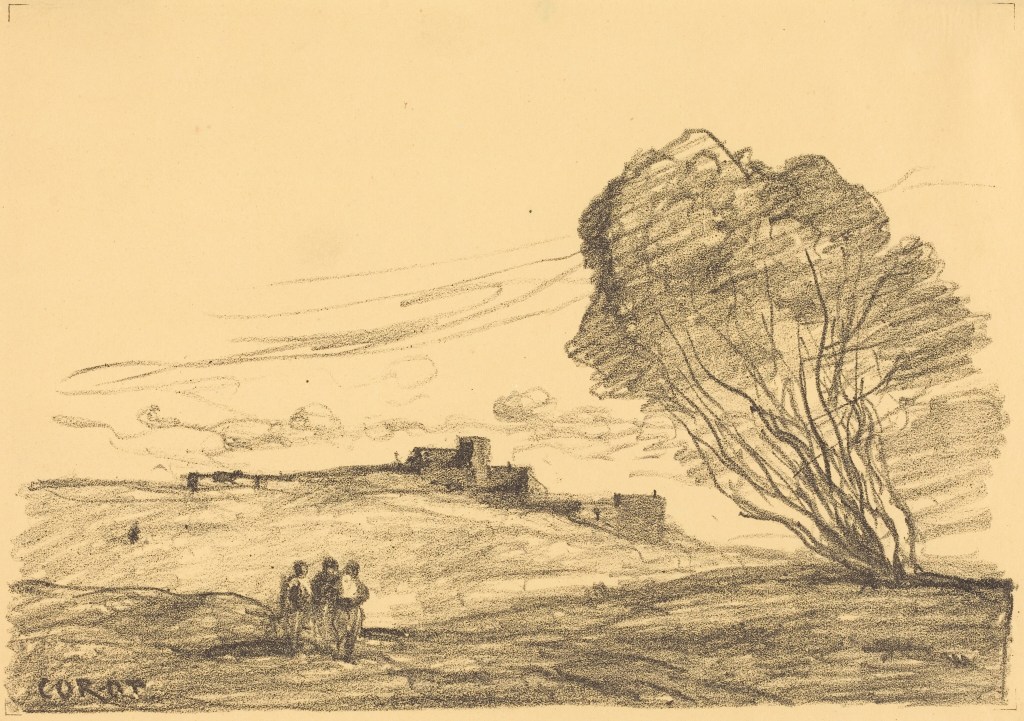
What is it to feel another’s pain, to sense the tremor of a stranger’s sorrow, if not to gaze into a mirror that reveals only the shadowed edges of one’s own estrangement? The act of writing, that solitary pilgrimage through the labyrinth of the self, often begins with a yearning to bridge the chasm between one soul and another. Yet, the very attempt to capture this connection in words exposes a paradox: the deeper one ventures into the heart of another’s suffering, the more vividly one perceives the walls of one’s own isolation. This essay, a meditation on the interplay between the impulse to connect and the inevitability of solitude, seeks not to resolve this tension but to trace its contours, to wander its paths, and to invite the writer to dwell in its unresolved questions. For what is writing, if not an act of reaching out, only to find the hand extended meets nothing but air?
In the ancient world, the philosopher Zeno of Elea crafted paradoxes that confounded the mind, suggesting that motion itself was an illusion, that Achilles could never overtake the tortoise. So too does the writer’s pursuit of empathy seem to falter under scrutiny. To write of another’s pain is to imagine oneself in their place, to don their cloak of grief or joy. Yet, is this not merely a projection, a shadow play of one’s own fears and desires? Consider the story of Narcissus, not as a tale of vanity, but as one of mistaken recognition. Gazing into the pool, he saw not himself but a vision he believed to be another, a beloved he could never touch. The writer, too, peers into the still waters of language, seeking the face of another, only to find their own reflection staring back. The attempt to inhabit another’s experience, to feel their wounds as one’s own, reveals the boundaries of the self—impenetrable, unyielding.
The act of writing about isolation, whether chosen or imposed, is itself an exercise in paradox. The writer retreats into solitude to forge worlds that might resonate with others, yet the very act of creation erects new barriers. In the 4th century BCE, Diogenes of Sinope, the Cynic philosopher, chose a life of radical solitude, dwelling in a clay jar in Athens, scorning the comforts of society. He lit a lamp in daylight, declaring he sought an honest man, yet his search was less for connection than for a mirror to reflect his own defiance. Was his isolation a rejection of the world, or a deeper attempt to understand it by standing apart? The writer, too, may choose solitude, retreating to the quiet of the mind to distill experience into words. Yet, in that retreat, does one not risk becoming like Diogenes, holding a lamp to illuminate others while remaining unseen?
The process of writing about isolation demands a confrontation with language itself. Words are both bridge and barrier, a means to convey the ineffable and a reminder of its elusiveness. Consider the metaphor, that alchemical tool of the writer, which seeks to transform the abstract into the tangible. To describe a heart heavy with loneliness as a stone sinking in a river is to invite the reader to feel its weight, to hear the muted splash of its descent. Yet, the metaphor also distances, for no stone can fully capture the texture of a particular sorrow. The writer, in striving to evoke the universal, risks diluting the singular. How, then, does one write of isolation without betraying its uniqueness? How does one sculpt a sentence that holds the reader close while acknowledging the unbridgeable gap between one mind and another?
The tension between connection and solitude is not merely a literary problem but a human one, woven into the fabric of existence. In the agora of ancient Athens, citizens gathered to debate, to trade, to connect, yet each carried within them a private world no other could fully enter. The Stoic Epictetus, a former slave, taught that true freedom lay in mastering one’s inner life, in recognizing that external bonds—whether of love or enmity—could never fully define the self. Yet, even he, in his teachings, reached out to others, as if to affirm that solitude gains meaning only in the shadow of connection. The writer, too, grapples with this duality: to write is to seek an audience, to imagine a reader who might nod in recognition, yet the act of writing is solitary, a dialogue with the self that no other can fully join.
This paradox finds its echo in the surreal, where the boundaries of reality blur, and the ordinary becomes a doorway to the strange. Imagine a writer seated at a desk, pen in hand, the room dissolving into a vast desert. Each word scratched onto the page becomes a footprint in the sand, a path leading nowhere. The writer looks up to see a figure in the distance, a silhouette that might be a friend, a lover, a stranger. They call out, but the wind swallows their voice, and the figure remains distant, unreachable. Is this figure the reader, the other whose pain the writer seeks to understand? Or is it the writer’s own shadow, cast long by the light of their solitude? The surreal invites such questions, reminding the writer that the act of creation is both a reaching out and a turning inward, a dance between presence and absence.
The process of writing about isolation is not a quest for answers but a practice of dwelling in uncertainty. What does it mean to feel another’s pain, if one’s own pain remains opaque? The writer, in attempting to capture the experience of another, must first confront their own estrangement. In the 1st century CE, the Roman poet Ovid, exiled to the Black Sea, wrote letters to an empire that no longer heard him. His words, elegant and desperate, were both a cry for connection and a testament to his solitude. Did he write to be read, or to make sense of his own dislocation? The writer today faces a similar question: is the act of writing about isolation an attempt to transcend it, or to embrace it as the root of all creation?
The structure of a story, like the architecture of a temple, can evoke the sacred or the desolate. A fragmented narrative, with its jagged edges and silences, might mirror the fractured experience of loneliness. A cyclical structure, returning again and again to the same image—a closed door, a silent room—might evoke the relentless return of solitude. Yet, the choice of structure is itself a confession: no form can fully contain the chaos of human experience. The writer, in choosing a beginning, a middle, an end, imposes order on the formless, yet the formless persists. How does one construct a story that honors the messiness of isolation without reducing it to a tidy arc? How does one write a sentence that feels true to the weight of aloneness without collapsing under its burden?
The interplay between empathy and isolation is perhaps most vivid in the act of reading. The writer imagines a reader who will see themselves in the words, who will feel the pulse of shared humanity. Yet, the reader, too, is alone, curled in a chair or standing in a crowded subway, their mind a private universe. The words on the page are a bridge, but a fragile one, swaying under the weight of interpretation. In the ancient Library of Alexandria, scrolls were gathered from across the world, a monument to the human desire to connect through knowledge. Yet, each reader who unrolled a scroll was alone with their thoughts, their understanding shaped by their own solitude. The writer, in designing a story, must acknowledge this solitude, must write not to erase it but to illuminate it.
The process of writing about isolation is a journey without a destination, a circling around a truth that remains just out of reach. The writer, like the mythic Sisyphus, pushes the boulder of language up the hill of meaning, only to watch it roll down again. Yet, in this labor, there is a strange beauty. To write of isolation is to affirm the human capacity to feel, to imagine, to reach out, even in the face of inevitable separation. It is to recognize that the mirror of empathy, though it reflects one’s own solitude, also catches glints of another’s light. The writer, in tracing the contours of this paradox, does not resolve it but deepens it, inviting the reader to linger in the space between connection and estrangement.
What, then, is the task of the writer who seeks to evoke isolation? It is not to offer solace or solution but to hold a lamp to the shadows, to name the unnameable, to weave a tapestry of words that is both a mirror and a window. The process is fraught with questions: How does one capture the texture of a loneliness that is both universal and singular? How does one wield language, that imperfect tool, to bridge the unbridgeable? The answers, if they exist, lie not in the product of the writing but in the act itself—in the courage to sit with the silence, to trace the edges of one’s own solitude, and to imagine, however fleetingly, the solitude of another.
In the end, the writer’s task is not to banish isolation but to dwell in it, to explore its depths, to find in its starkness a strange kind of communion. The desert of the mind, vast and unyielding, is also a place of creation, where words rise like oases, fleeting but vital. The writer, in their solitude, crafts a world that others might inhabit, if only for a moment. And in that moment, the mirror of empathy reflects not just the pain of isolation, but the fragile, persistent hope of connection.

 The Grieviary
Leave a comment